Whole-Body Cryotherapy - How does it work?
Whole-body cryotherapy works by exposing the body to extreme cold for a short period. Ideally you should achieve a reduction in skin temperature of at least 12 Celsius during a period of three minutes to achieve the desired results. The more sessions you do (within reason), the better the results.
Whole-body cryotherapy triggers:
An Anti-Inflammatory Response
- Firstly and immediately, the body detects the cold and initiates the sympathetic "fight-or-flight" response. This response sends the hormones and neurotransmitters adrenaline (epinephrine), noradrenaline (norepinephrine) and dopamine skyrocketing. As an evolutionary reaction to the rapid increase in these hormones and neurotransmitters, the body temporarily shuts down all but the necessary functions it needs to either run or fight. One of the functions it temporarily shuts down is the inflammatory response, which can remain depressed for many hours after the initial shock.
- Secondly and immediately, having detected the cold, the central nervous system and pituitary gland in the brain produces endorphins. These are natural, morphine-like chemicals acting as the body's natural painkillers, they block pain signals and trigger feelings of pleasure, relaxation, and overall well-being. This is why, despite the cold, whole-body cryotherapy can feel so good.
- Thirdly, when the session is over and you relax in the warmth of the infrared sauna, the blood vessels that constricted during the session, dilate. This dilation allows more blood to flow than normal flooding the tissues with oxygen necessary for repair and renewal.
- Fourthly, when the session is over and the body warms, the parasympathetic "rest-and-digest" response is triggered. This response is primarily managed by the vagus nerve which signals the brain to release the neurotransmitter acetylcholine. This binds to specific receptors on immune cells (macrophages), effectively shutting down the production of inflammatory proteins.
A Fat-Buring Response
- Firstly, and immediately, the body detects the cold and initiates the sympathetic "fight-or-flight" response as above.
- Secondly and immediately, the released norepinephrine binds to specific receptors called Beta-3 adrenergic receptors on the surface of white fat cells. This triggers a chemical cascade that alters the way in which the cell works.
- Thirdly and for some time after, this cascade causes mitochondrial biogenesis. This is when the white fat cells begin to pack themselves with iron-rich mitochondria (the cell's powerhouses), which gives the fat its characteristic brown colour.
- Fourthly, as another part of this cascade, the cells produce a specialized protein called Uncoupling Protein 1 (UCP1). UCP1 allows the mitochondria to bypass the normal process of making energy (ATP) and instead directly release that energy as heat - a process called non-shivering thermogenesis.
- Fifthly, the process of non-shivering thermogenesis uses both stored fat and excess glucose resulting in weight loss and lower blood glucose levels.
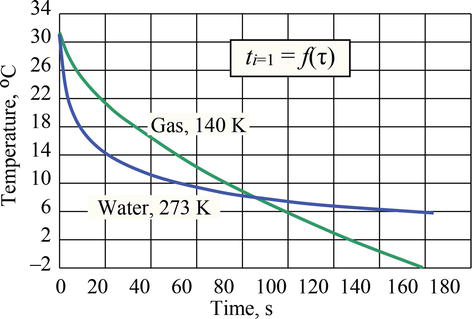 This is a really interesting plot taken from an article called 'Technique and Technology of Whole-Body Cryotherapy (WBC)' and shows why jumping into cold water at freezing point (0 Celsius/273Kelvin) initially feels a lot colder and puts the body under far more instantaneous stress than whole body cryotherapy (labelled Gas in this plot) at -133 Celsius/140 Kelvin. It shows skin temperature against time for both an ice water plunge v's whole body cryotherapy.
Another question often raised is the difference between whole-body cryotherapy and cold plunges.
Both ultimately achieve the same goals as detailed above, but cold plunges are much more dangerous and extremely uncomfortable. This means that you are far more likely to stick with whole-body cryotherapy than you are with cold plunges.
|