|
Red Light Therapy - How does it work?
Google AI: 'Red Light Therapy, also known as photobiomodulation (PBM), is a non-invasive therapy that uses low-level lasers or light-emitting diodes (LEDs) in the red to near-infrared spectrum to stimulate cellular function. It works by triggering a biochemical effect in cells, such as increasing mitochondrial ATP production, to promote tissue repair, reduce inflammation, and relieve pain. PBM is also known as low-level laser therapy (LLLT) or red-light therapy and is used for various conditions affecting the skin, muscles, and joints.'
The problem is, as your body cells do their thing, things don't always go to plan and things can get out of kilter. A byproduct of certain cellular processes is a molecule called nitric oxide (NO) which is a good substance in many respects as it's a vasodilator; it opens up blood vessels. But, it's very similar in size and shape to an oxygen molecule (O2) and it has a nasty habit of blocking an important process in your mitochondria which effectively stops the production of ATP. ATP is the molecule that all cells use for their energy; energy that the cells need to grow and repair themselves. Mitochondria are the little things in nearly every cell in your body that do the last part of the process of converting the energy in the food you've eaten into energy that your cells can use (cells can't directly use the energy from the food that you eat). But nitric oxide blocks one of the processes; it latches on to something called Complex IV and simply won't let go. It latches onto the exact place in Complex IV where your oxygen should go! 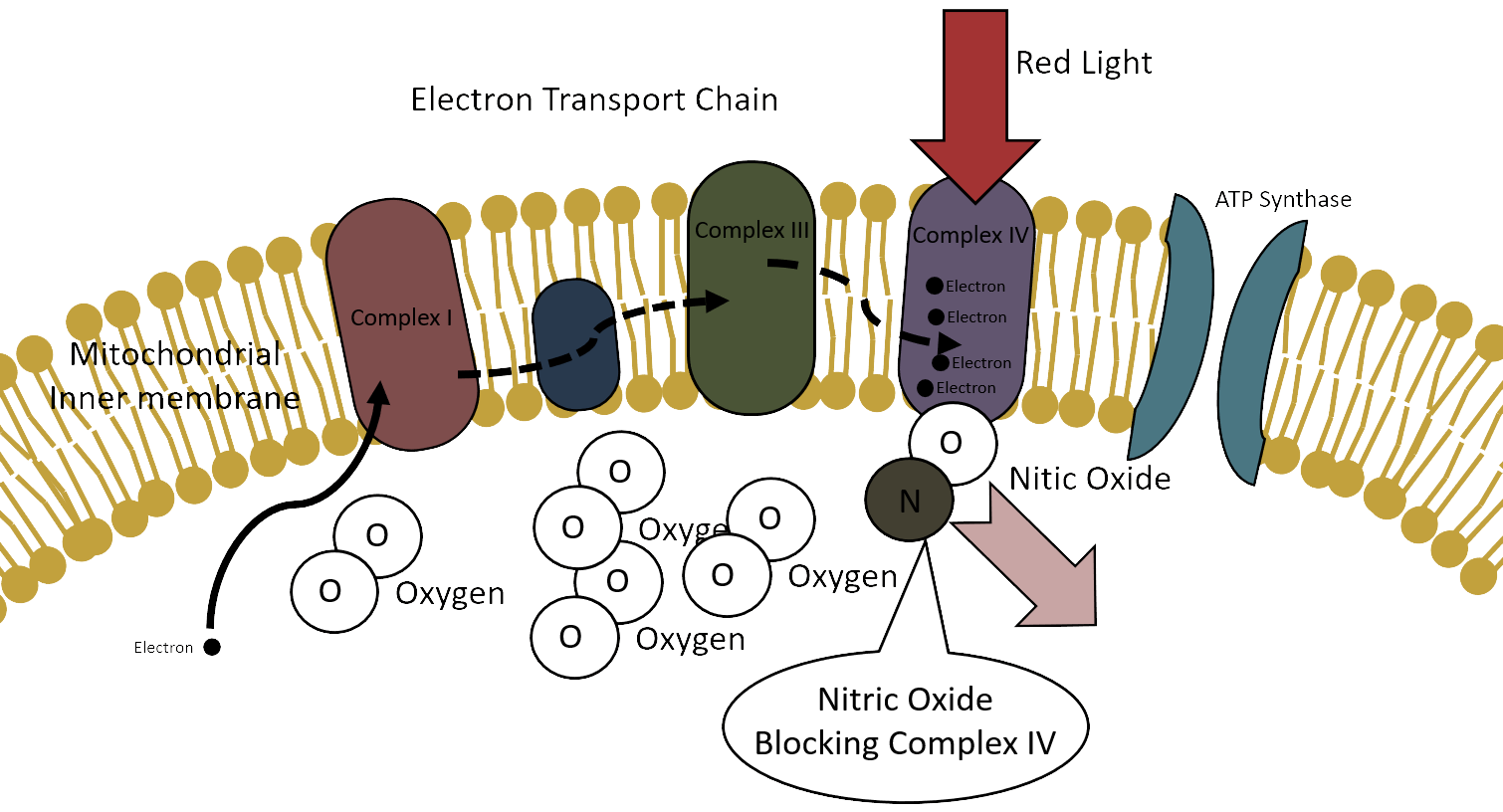 The answer is... red and infrared light. It's often very surprising to learn how deeply into your skin, and then into the tissue below, that red and particularly infrared light penetrates. This is when the magic happens; this light literally sets complex IV into such rapid shaking (resonance) that it sends the latched-on nitrous oxide flying off. A short while later (nanoseconds or less) complex IV relaxes to a lower energy state and is free to accept oxygen molecules as it should, and the efficient production of ATP can restart. The bonus is that the released nitric oxide then dilates your blood vessels, allowing even more oxygen to flow. This is why we recommend a Red Light Therapy session immediately prior to a Hyperbaric Oxygen Therapy (HBOT) session. 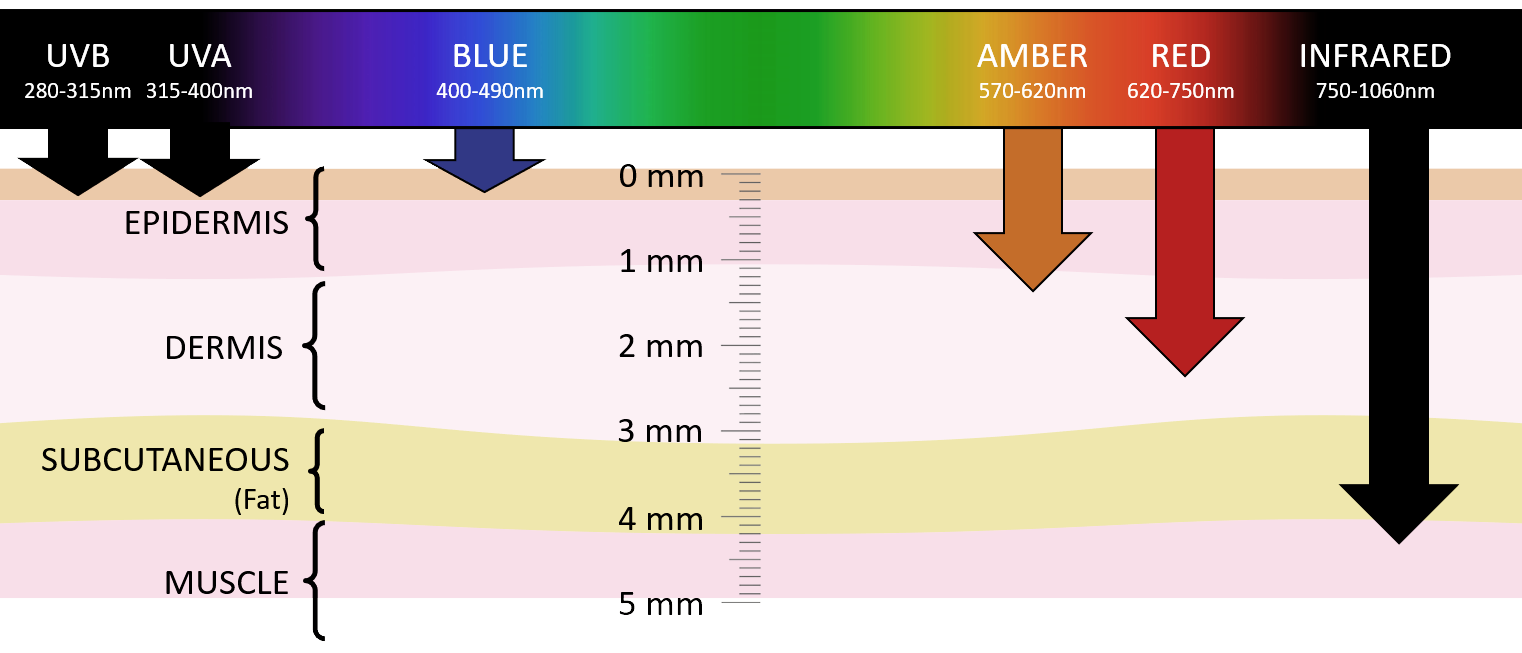 A question was raised recently which asked if this therapy simply uses ordinary red light that you can get outside, in abundance, on any sunny day, why don't we just go out on a sunny day to achieve the same benefit? The answer is... you can, and if you do strip off on a sunny day and spend some decent time basking, you will receive the benefits. But three things; the sun's not always out and in the current icehouse Earth, it's generally too cold to be wandering around without clothes. Secondly, we are rightly concerned about the negative effects that ultraviolet radiation can have on our skin (which you don't get in red light therapy - it's not a sunbed). And thirdly, most of us don't have the time necessary for lazing around in the sun to fully reap the benefits in the first place. |