|
HBOT - How does it work?
When you breathe normal air (21% oxygen) at ordinary pressure (1 atmosphere) most of the oxygen being transported around your body is carried by your red blood cells with very little being carried (or dissolved) in the blood plasma. There is a scientific law called Henry's Law that says when you have a gas above a liquid and you put that gas under increased pressure, you will force more of the gas to be dissolved into the liquid than it normally would.
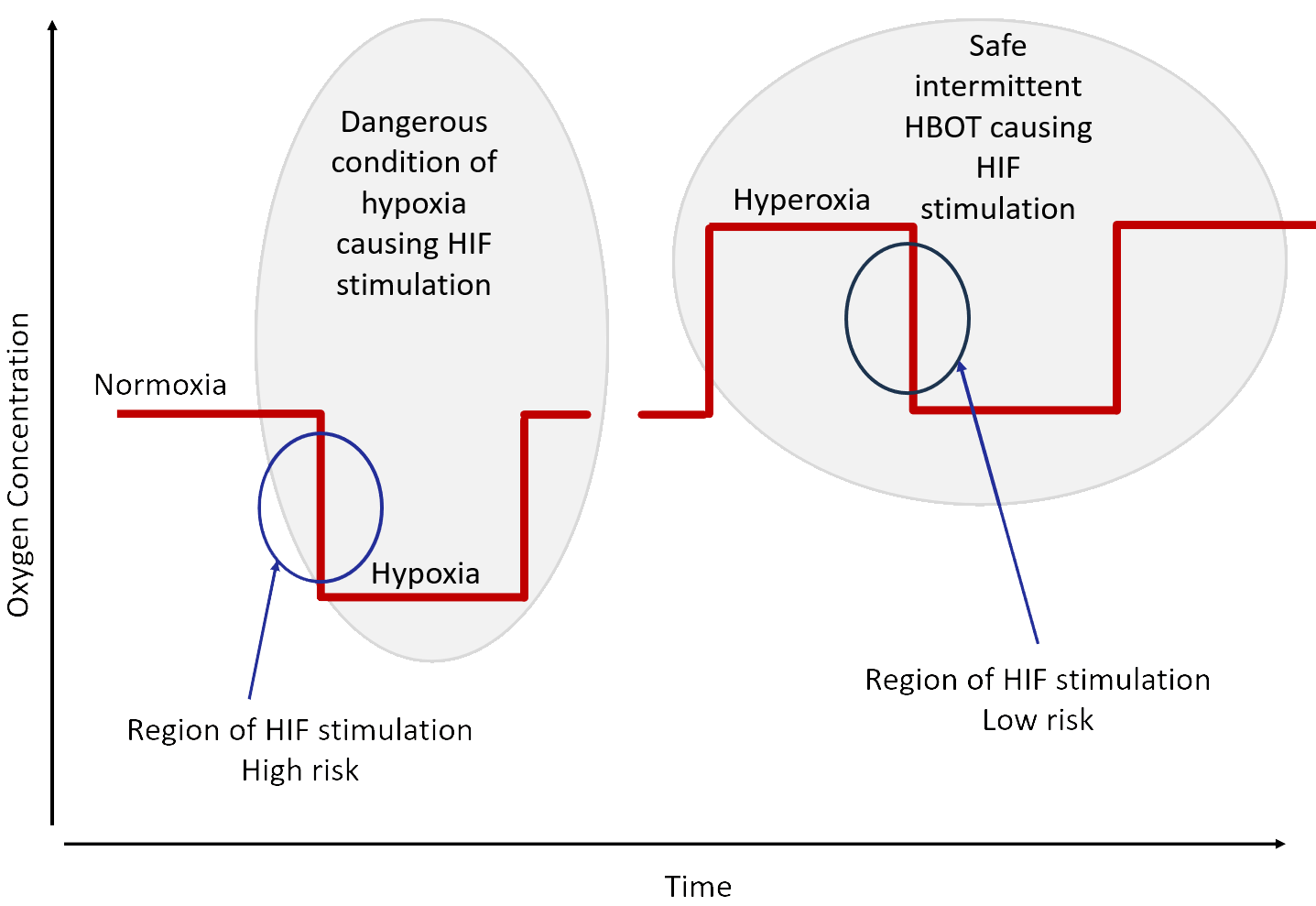
Indeed, if you double the pressure, you double the amount of gas dissolved. In the case of our HBOT chamber that delivers 100% oxygen (increasing what is called the partial pressure of oxygen by a factor of approximately 5) at 2 atmospheres of pressure, means that the blood plasma can carry 10 times its normal amount. There are very many conditions, often as result of chronic inflammation, that lead to constriction of your blood vessels. Try as they might, your relatively large red blood cells sometimes find it very difficult to squeeze through these narrowed blood vessels and the tissue on the other side suffers; the tissue takes longer to heal and can even begin to die. Your blood plasma, being largely water and so much thinner in consistency, can however slip through with ease. HBOT allows this blood plasma to carry 1000% more oxygen that it normally does and therefore supplies these suffering cells with the oxygen they so desperately need to survive and then to start healing. 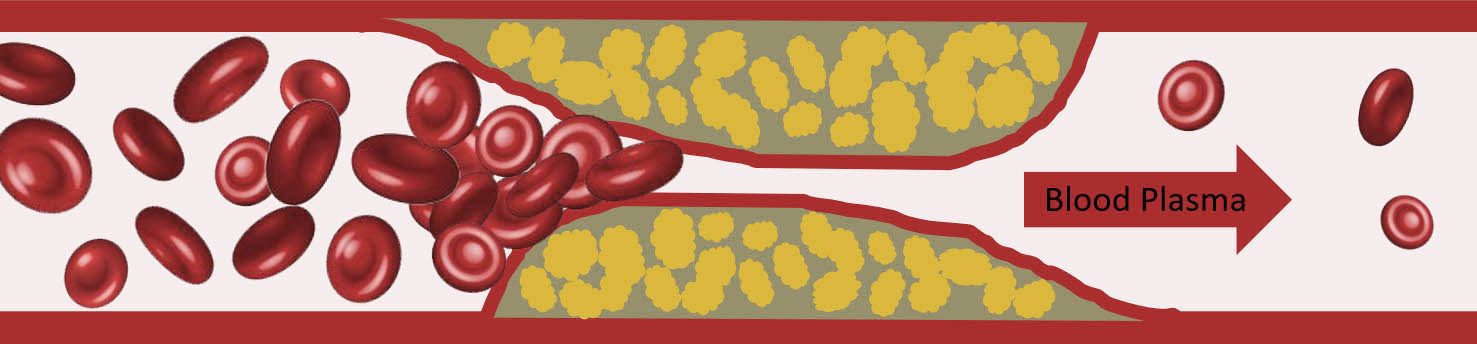 Intermittent HBOT, The Hyperoxic-Hypoxic Paradox. This is an extremely important phenomenon and one which the medical field is only just waking up to. It happens when the body detects oxygen levels becoming low. When it detects this, or thinks it detects this, it quickly switches on a protective mechanism that initiates all manner of biological processes that evolution has dictated will increase the body's chance of survival e.g. rapid creation of new blood vessels, increase in mitochondria functionality, increase in stem cell proliferation and mobility. The thing is, studies have shown that the body detects the changes in oxygen concentration, not the actual levels. The body, therefore, implements the same protective mechanism whether the body goes from a normal oxygen concentration (normoxia) to one of low oxygen concentration (hypoxia) - which is obviously very dangerous - as it does when going from high oxygen concentration (hyperoxia) to normoxia which is very safe. This is the hyperoxia-hypoxia paradox. How does it actually work? The first thing to note is that the body is constantly sending signals around itself that make some processes happen more quickly or some processes happen more slowly to keep the body in a stable condition (homeostasis), ultimately, so that it does not die. These signals are either electrical (nervous) or chemical (chemo). There is a chemical called Vascular Endothelial Growth Factor (VEGF) that when created by the body in sufficient amounts tells the vascular system to sprout new blood vessels thereby restoring blood and oxygen to tissues that have been injured or are lacking in blood and oxygen supply. This VEGF is ultimately what we want to make for healing processes to be optimised (other than if you have cancer or certain eye diseases). Here's the nuts and bolts.
 |